Frequently Asked Questions
-
Unlike existing Pagan organizations, which tend either to cater to only one branch of Paganism (Wicca, Heathenry, Druidry, etc.) or attempt to “merge” the various rites of Paganism into one universal Pagan expression, the Green Chapel envisions Wicca, Heathenry, Druidry, Hellenism, Kemeticism and all the other branches of Paganism as species within an ecosystem. We are ritually, culturally, and sometimes ethically distinct from each other and yet all part of a unified spiritual whole and therefore stronger together.
-
The inspiration for the Green Chapel came from two different sources. The first was a visit by the Rev. James Jufer to the Cathedral of St. Patrick in Dublin Ireland. At the time of Rev. James’ visit, the locals had, somewhat ironically, if you know your hagiography, placed a paper tree in the center of the church! This made Rev. James wonder, “why couldn’t it just be a real tree?” and thus a vision was born to create Pagan worship spaces that, through a combination of green-housing, forestry and land conversation would tie every act of Pagan worship to the active restoration of the Earth.
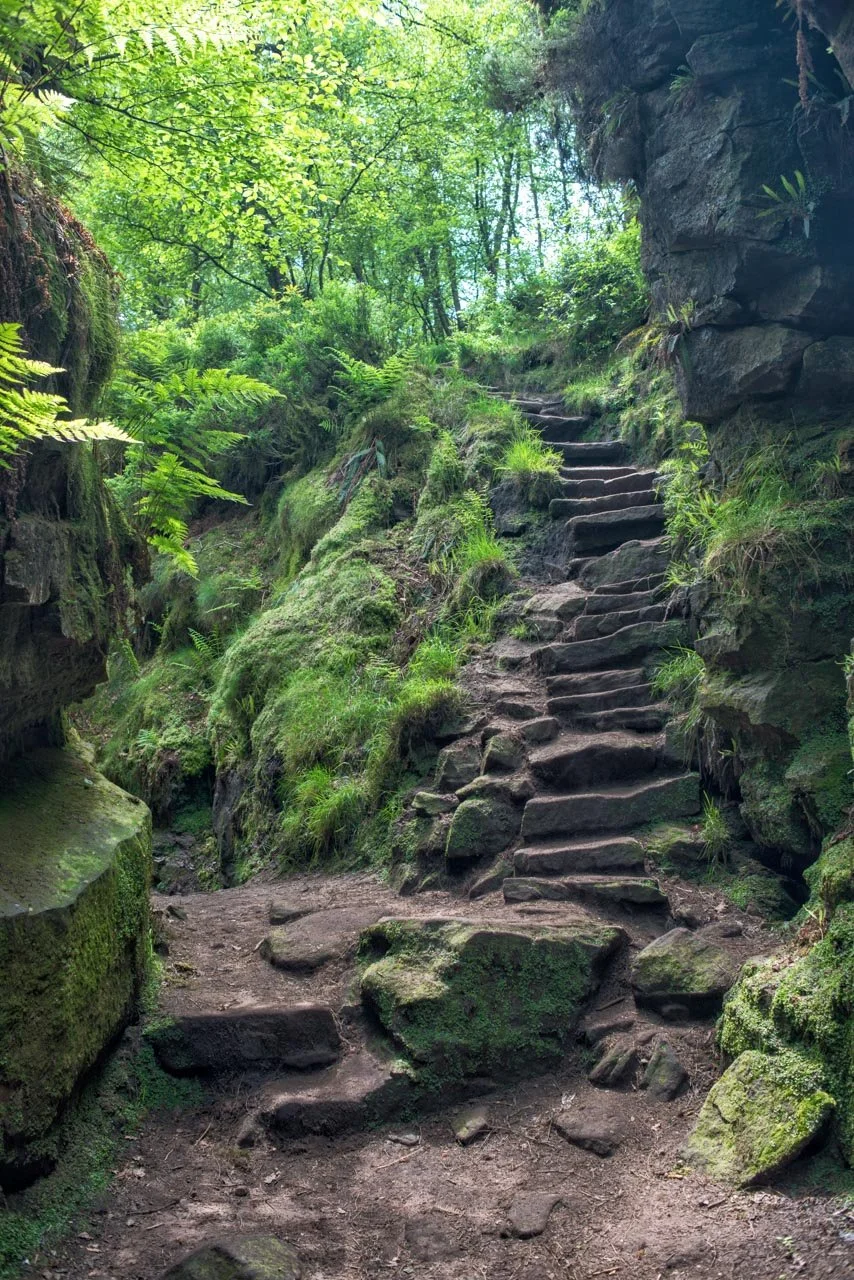
The second inspiration comes directly from the mythos of the Green Knight. One of the classic tales of Arthurian legend, the Green Chapel is the tale’s location for the end of Sir Gawain’s journey and contest with the Green Knight. It is thus a place of trial, challenge and overcoming obstacles. As importantly, it is described in the tale not as a proper Chapel in the Christian sense, but a wilderness, Nature’s Chapel, where spiritual growth happens. -
We at the Covenant of Green Chapels believe that one of our primary ethical duties as Pagans is to protect the Earth and Her creatures. As such, we aspire to a true Pagan architecture in which ecological sustainability is built right into the temple and its land.
While we believe the architecture of a local Green Chapel should reflect the needs of local Pagans (i.e a Heathen majority should build a traditional hall), all Green Chapels are expected to integrate green-housing measures, solar-paneling and the use of land for the preservation of local fauna and wildlife to the highest extent fiscally and logistically possible. -
While we encourage Wiccans, Heathens, Druids, and practitioners of other rites to practice and worship in the fullness of their own rite, we also fundamentally believe that Paganism is one religion.
However, unlike other organizations that view Paganism as one religion, we have no desire to merge or remove the distinction between rites. Like many species in an ecosystem, Paganism is fuller and more beautiful when Heathens, Wiccans, Druids and others all do their thing to the fullest!
As a general practice, we will welcome and support any group of practicing Pagans that wish to join, accept our code of ethics, and are in general agreement with the Green Chapel’s seven theological tenets. -
Once ratified by the founding Chaplains (our clergy), The Code of Ethics will be found in the About section alongside the Constitution of the Covenant of Green Chapels. It is a sizeable document because many of its rules govern best practices for Chaplains regarding the use of their power as leaders. As we found a new organization, we wish to avoid the mistakes of past organizations.
As a synopsis however, if you believe consent is important, religion should not be a tool of control over others, and do not hold to racist, sexist, homophobic or transphobic ideologies that seek to harm others for in-borne traits beyond their control, you probably agree with the greater substance of the Code of Ethics as it applies to laypeople. -
The Green Chapel has identified Seven tenets of belief that tend to be held in common by all Pagans. We provide these not as a dogma, but as a guide:
1. Divine Femininity and Divine Masculinity: The divine manifests in many and myriad ways that at minimum include feminine expressions (i.e. goddesses) and masculine expressions (i.e. gods).2. Polytheism: We believe in a plurality of deities. This plurality can be two or millions based on the personal gnosis of the individual member, but it is always a plurality.
3. Seasonal Reverence: The gods express themselves through the life of the world and its seasons. As such, we venerate specific aspects of the deities at seasonally appointed times (ex. The Wheel of the Year).
4. Magickal Practice: Humans are kin to the gods and as such we have our own power. We believe the cultivation of this spiritual power, known as magick, is just as important to our health and well-being as the cultivation of the body in exercise and the mind in study.
5. The Birth Narrative of Existence: The world was not created by one God, but rather born of the combined efforts of the Divine Feminine and the Divine Masculine.
6. The Divinity of Existence: Due to the Birth Narrative of Existence we share more in common with the gods than we hold apart from them.
7. The Ethical Mandate to Preserve Ecological Harmony: Existence itself resides within the divine and therefore is so itself. We therefore place maximum ethical priority on the preservation of ecosystems which are the natural expressions and systems of the divine.
-
Green Chapel ministers are currently available to conduct funerals, rites of passage, tarot readings, rune readings, spiritual care and speaking events.
Upon formal recognition by the IRS as a 501(c)(3) (that is, a tax-exempt church), Green Chapel ministers will become available to conduct weddings.
-
The Green Chapel works with the goal of establishing a brick-and-mortar Green Chapel in every urban center and every location that has enough Pagans to support it. As we grow, we also wish to eventually found an Association of Theological Schools (ATS) accredited school of ministry that caters specifically to Pagans both within the Green Chapel and from other Pagan groups. We aim to use all monetary donations given to the Covenant of Green Chapels for these two purposes.
While the Green Chapel holds that in-person worship at temples is the ideal for Pagan life and practice, we also recognize that health considerations and geographic isolation do not always allow for this. As such, when a suitable Chaplain is identified, we will begin to provide a weekly digital service.
-
Please send all inquiries to greenchapelusa@gmail.com. We look forward to hearing from you!